

Public sector finance teams are doing more with less. Budget shortfalls, rising compliance demands, and growing public expectations are converging at a time when most teams are small, stretched, and still running largely on spreadsheets. The 2026 State of Public Budgeting report from Euna Solutions draws on survey data from 46 public sector finance and budget leaders to examine the tools they rely on, the challenges slowing them down, and the priorities driving their work.
Download Your Report
"*" indicates required fields
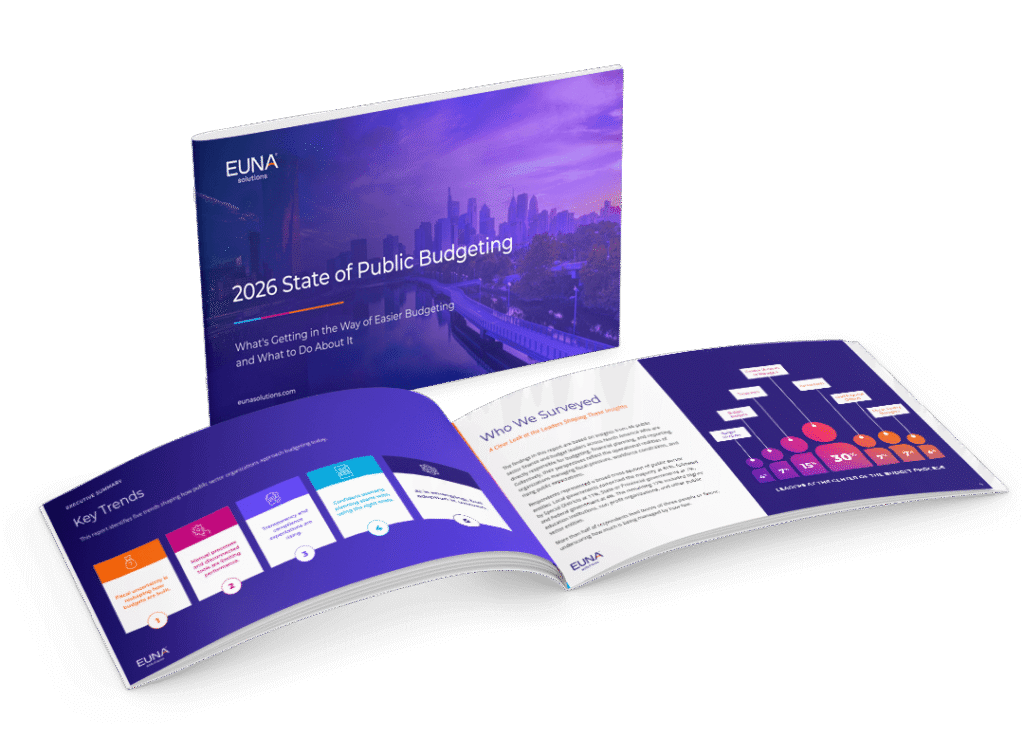
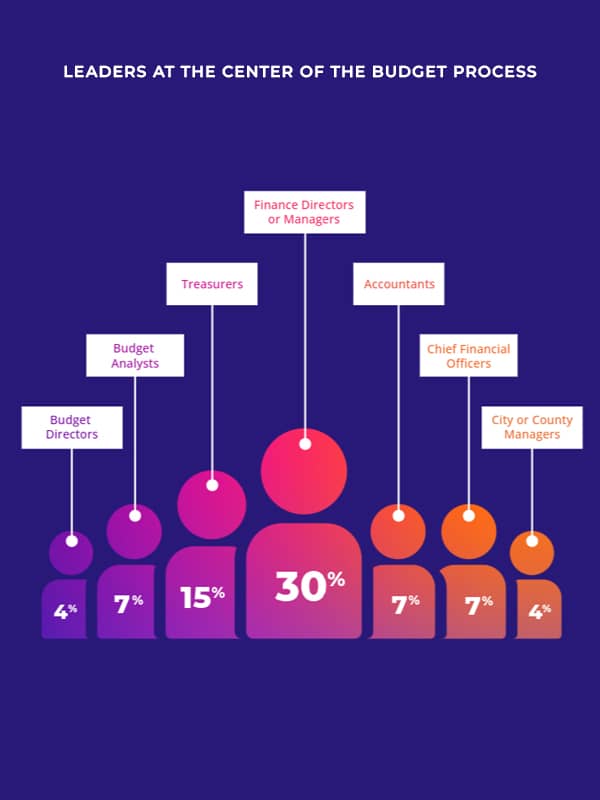
This report is based on insights from 46 public sector finance and budget leaders across North America who are directly responsible for budgeting, financial planning, and reporting. Their perspectives reflect the operational realities of organizations managing fiscal pressure, workforce constraints, and rising public accountability expectations.
Download the 2026 State of Public Budgeting report to explore:
Public sector finance teams are navigating one of the most demanding budget environments in recent memory. Declining federal transfers, inflationary cost pressure, and growing public accountability expectations are converging at a time when most teams are small, stretched, and still running largely on spreadsheets.
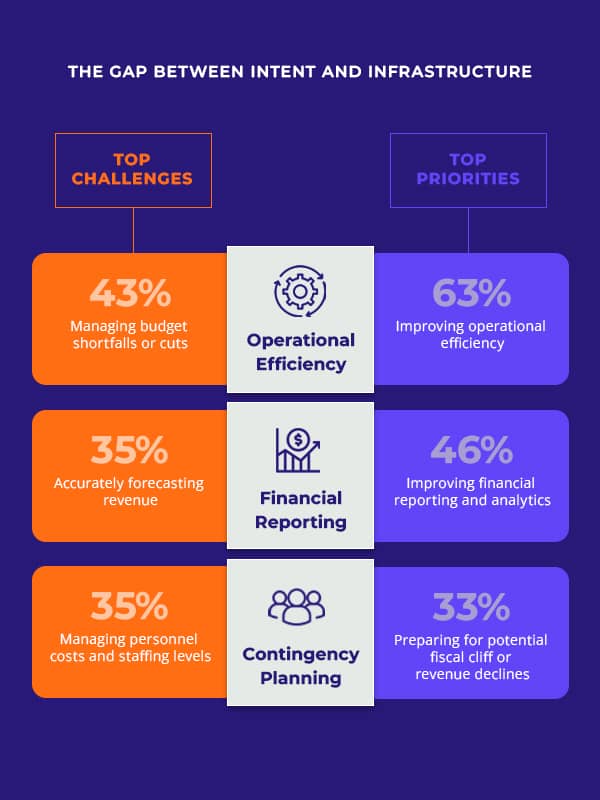
The challenge is not a lack of awareness. Finance leaders have a clear view of what needs to change: 63% cite improving operational efficiency as a top priority, and 46% want stronger financial reporting and analytics. The gap is between intent and infrastructure. The tools most organizations rely on were not built for the complexity they now face.
The result is a widening imbalance. Expectations are rising, workloads are expanding, and the operational infrastructure supporting these teams has not kept pace. The 2026 State of Public Budgeting report examines where that gap is most visible and what organizations can do about it.
Our research highlights several trends shaping the future of public sector budgeting:
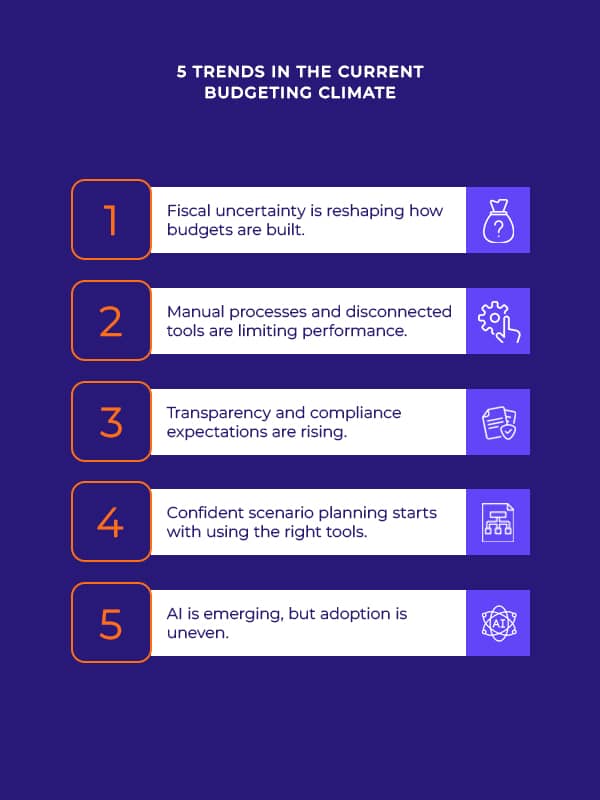
State and federal funding reductions are the top revenue concern. Budget shortfalls, inflationary pressure, and personnel costs are squeezing both revenue and spending simultaneously.
39% of teams take three months or longer to publish annual budgets, and half require multiple coordination steps for mid-year forecasts.
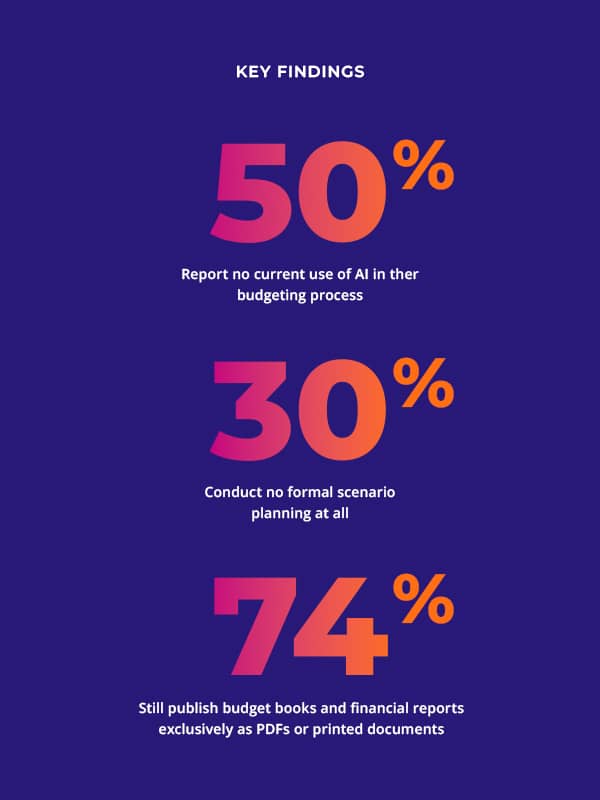
74% publish financial reports as PDFs or printed documents. 20% of leaders are unaware of 2026 ADA Title II requirements for accessible digital content.
30% conduct no formal scenario planning; two thirds of those who do rely on spreadsheets.
Half report no AI use in budgeting. Among larger teams, 59% use generative AI tools; among teams of three or fewer, only 17% do.
The 2026 State of Public Budgeting report is a research-based publication for public sector finance professionals, including Finance Directors, CFOs, Budget Analysts, Treasurers, and City and County Managers. It examines the tools, challenges, and priorities shaping public sector budgeting today and provides five actionable recommendations for modernizing operations.
The report includes five specific actions finance leaders can take to close the gap between their goals and their current infrastructure. Each recommendation is grounded in survey data from real public sector practitioners, from replacing spreadsheets to preparing for ADA compliance and AI-readiness.
Unlike general guides, this Euna Solutions report is based on firsthand survey data from 46 public sector finance leaders. It focuses specifically on the operational and technology realities facing these teams, including process limitations, evolving compliance demands, and the emerging role of AI in public sector budgeting.

My goal this year is to be as transparent and accountable to our budget as we can. I don’t think the general population understands everything that goes into what a city has to take care of. I want to do more visualizations with Euna Budget so people can follow along.
Jodi Lehman-Wills
Budget Analyst and Grant Coordinator, City of Lakeway, Texas

To provide the best experiences, we use technologies like cookies to store and/or access device information. Not consenting or withdrawing consent, may adversely affect certain features and functions.